Author name: info@adpubsvalue.com

Uncategorized

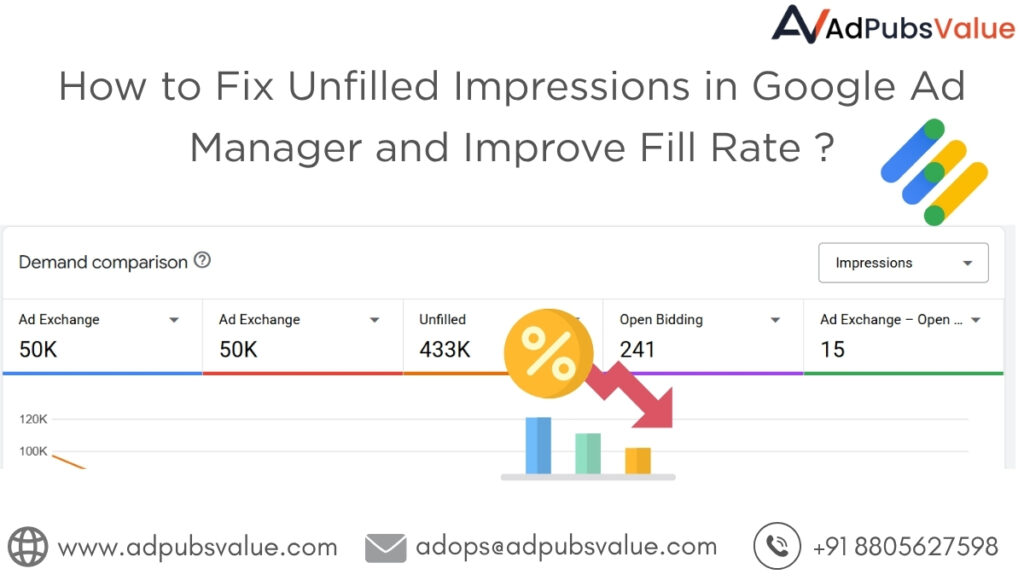
Reduce Unfilled Impressions and Improve Fill Rates in Google Ad Manager

In world of digital publishing, every impression matters. When an ad request is made but no ad is served, the impression goes unfilled  resulting in wasted opportunities and lost revenue for publishers. This is a common challenge in Google Ad Manager (GAM) Think of it this way unfilled impressions are like wasting your traffic. You worked hard to bring users to your site, but if ads don’t serve, those valuable page views generate zero revenue. It’s like opening a shop, attracting customers inside, but keeping empty shelves. Optimizing fill rates ensures that every bit of your traffic is monetized effectively. At AdPubsValue, we help publishers maximize their ad revenue by addressing exactly these challenges. In this article, we’ll break down what unfilled impressions are, why they occur, and the actionable strategies you can use to improve your fill rates in Google Ad Manager. Understanding What is Unfilled Impressions An unfilled impression occurs when a user visits your site, an ad request is made, but Google Ad Manager is unable to serve an ad. Instead of an advertisement, the slot may remain empty, display a backup creative, or collapse altogether. Some of the most common reasons for unfilled impressions include : Each unfilled impression represents a lost revenue opportunity and when accumulated across millions of page views, the impact on a publisher’s bottom line can be massive. Why Fill Rate Matters Fill rate is the percentage of ad requests that result in an actual ad being served. For example, if your site generates 1,000,000 ad requests but only 850,000 ads are delivered, your fill rate is 85%, leaving 150,000 impressions unfilled. A higher fill rate means: Publishers aiming for maximum yield should always monitor their fill rate and take proactive steps to minimize unfilled impressions. Common Reasons of Low Fill Rates How to Fix Unfilled Impressions in Google Ad Manager   1. Optimize Google Ad Exchange (AdX) Setup If you’re facing unfilled impressions in Google Ad Manager, it doesn’t always mean there’s no demand — often it’s about how GAM and AdX are configured. Many publishers unknowingly block bids or limit competition because of targeting rules, floor prices, or poor ad placements Bottom line: AdX is powerful, but optimization is key. Don’t just enable it fine-tune it. 2. Diversify Demand Sources One of the best ways to reduce unfilled inventory is to increase competition for your impressions. Incorporate multiple demand sources such as SSPs, ad networks, and programmatic buyers through header bidding or mediation. This ensures that if one source doesn’t have an ad, another can step in. 3. Smart Floor Price Management Instead of static CPM floors, adopt dynamic pricing strategies. For example, use data-driven rules to adjust floors based on geography, time of day, and traffic quality. At AdPubsValue, we use AI-powered floor optimization to ensure publishers maximize CPMs without sacrificing fill. 4. Broaden Targeting When Possible While precise targeting is valuable, being too narrow limits eligible line items. Review targeting rules across your GAM setup and loosen restrictions where possible to expand competition. 5. Stick to Standard Ad Sizes Popular formats such as 300×250, 728×90, 320×50, and 336×280 are widely supported and attract the most demand. Always include fallback creatives to maximize coverage. 6. Optimize Page Speed and Reduce Latency Slow-loading ads often get skipped or timed out, especially on mobile. Best practices include: 7. Leverage Programmatic Guaranteed and Preferred Deals Direct deals with advertisers can guarantee impressions and ensure that premium inventory is always monetized, reducing reliance on open exchanges alone. 8. Apply Ad Refresh (with Caution) Refreshing ads after a set interval can increase overall revenue and reduce wasted slots. However, refresh should be implemented carefully to avoid policy violations and ensure ads remain viewable. 9. Utilize House Ads for Unsold Inventory Even with all optimizations, some impressions may still go unfilled. Instead of leaving those slots blank, publishers can serve house ads (internal promotions). This ensures that no impression is wasted, even if it doesn’t generate direct ad revenue. House ads can: Before diving into optimization strategies for Fill Rate, it’s important to remember that advertisers don’t just want impressions they want viewable impressions. Even if your ad slots are technically being filled, low viewability can make advertisers bid less or avoid your placements altogether, which in turn increases unfilled impressions. That’s why monitoring and improving Active viewable impressions in Google Ad Exchange (AdX) is one of the most critical steps in reducing wasted traffic.One of the most overlooked reasons for unfilled impressions is low viewability. Advertisers don’t just pay for ads to load  they want them to be seen. That’s where Active View % (viewable impressions) comes in. What Is Active viewable impressions ? Active View % measures how many of your served impressions were actually viewable by users. An impression is considered viewable when: If and ad loads at the bottom of the page but the user never scrolls down, it counts as served but not viewable, lowering your Active View %. Why Low Active View Hurts Fill Rates How to Improve Active Viewability Improving Active View increases advertiser trust, raises competition, and reduces unfilled impressions. Unfilled impressions represent wasted potential not just in terms of revenue, but also in user engagement and advertiser trust. By optimizing AdX, diversifying demand, producing high-quality content, managing floor prices smartly, and improving Active View %, publishers can significantly reduce unfilled inventory and improve fill rates in Google Ad Manager. For publishers serious about maximizing ad revenue, fill rate optimization should be a top priority. Don’t let unfilled impressions hold back your growth. At AdPubsValue, we specialize in optimizing Google Ad Manager and AdX setups, improving fill rates, and connecting publishers with premium demand sources. 👉 Get in touch with us today and let our experts help you unlock the full earning potential of your ad inventory. 📩 Contact Us Now | 🌐 Visit AdPubsValue.com  

How to Get Google AdX MA Approval
Uncategorized

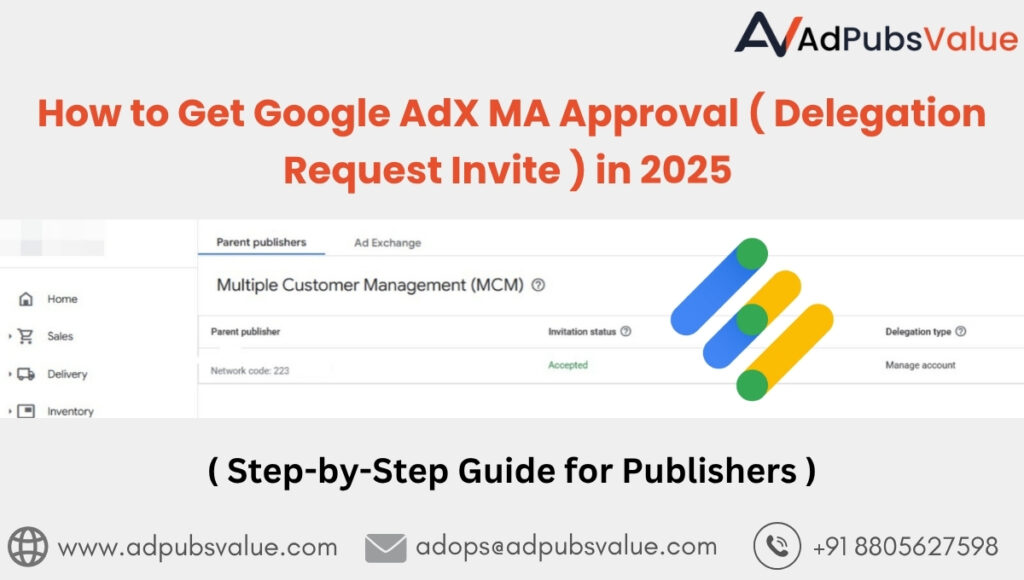
How to Get Google AdX MA Approval in 2025 (Step-by-Step Guide for Publishers)

For publishers looking to maximize ad revenue, Google AdSense is often the first step. It’s easy to set up and works well for small to medium websites. However, as your traffic grows, AdSense may no longer provide the full revenue potential you deserve. This is where Google Ad Exchange (AdX) comes in. AdX is a premium, enterprise-level advertising platform that connects publishers with high-paying advertisers, programmatic demand platforms, and direct deals. But unlike AdSense, you cannot apply for AdX directly. Access is only available through a Google Certified Publishing Partner (GCPP) or an MCM Partner like AdPubsValue. In this guide, we’ll walk you through everything you need to know to get Google AdX MA Approval, including eligibility requirements, the role of MCM partners like AdPubsValue, and the step-by-step process to secure your delegation request and start monetizing effectively. Let’s Understand the Two Types of Google AdX Access Google Ad Exchange (AdX) offers publishers two main ways to access its premium ad demand MA (Managed Account) and MI (Managed Inventory). Both provide opportunities to monetize traffic with high-paying advertisers, but they differ significantly in terms of control, reporting, and payments. Before we go into the step-by-step process of getting MA approval, let’s first understand what MA are, and how they differ for publishers of varying sizes and technical expertise. What is Google AdX MA (Managed Account)? Google AdX MA (Managed Account) gives publishers the highest level of control and access within Google Ad Manager. In this setup, the publisher operates almost like a direct AdX partner with full visibility and transparency. With an MA account: Publishers can create and manage ad units directly in Google Ad Manager (GAM). They can set pricing rules, inventory settings, and advanced ad delivery controls. Publishers have access to detailed real-time reports and analytics. Payments come directly from Google, ensuring complete transparency. Best for large publishers with high traffic and quality content who can handle advanced ad operations. Getting Started with Google AdX Before you can use Google AdX, you must have an approved Google AdSense account. This shows Google that your website follows their rules and has good traffic. To start with AdX, you also need: Google Ad Manager A delegation request for either MA (Managed Account) or MI (Managed Inventory), sent by a Google partner like AdPubsValue Role of Partners Like AdPubsValue MCM partners like AdPubsValue act as the gateway to Google AdX. Oue role includes: Reviewing your website to ensure it meets traffic, content, and compliance requirements. Sending the delegation request Assisting with onboarding, setup, and optimization of ad units in Google Ad Manager. Providing guidance and support for maximizing revenue through premium AdX demand. Step-by-Step: How to Get Google AdX MA Approval   1. Check Eligibility To get a Google AdX MA delegation request from AdPubsValue or another partner, your website must meet certain requirements: Consistent traffic volume (generally millions of monthly impressions). High-quality content that provides value to users. Full compliance with Google’s Publisher Policies (brand-safety, no invalid traffic, no prohibited content). 2. Partner with a Certified MCM Partner Reach out to a MCM Partner like AdPubsValue. The partner will review your traffic, content quality, and compliance. 3. Receive Delegation Request Once approved, AdPubsValue sends an MA delegation request to your Google account. 4. Accept in Google Ad Manager Log in and accept the delegation request. Your Google Ad Manager account is now linked with AdX under MA access. 5. Start Monetizing Create ad units, Creative, Delivery directly in Google Ad Manager. Manage pricing rules, inventory segmentation, and ad delivery. Enjoy premium demand and payments directly from Google. Requirements to Get Google AdX MA Approval via AdPubsValue To qualify for AdX MA approval through AdPubsValue, your website must meet the following criteria: Google AdSense Approved: Your site must already have an approved AdSense account. Payment History : At least 3 successful AdSense payments in the last 3 months, each exceeding $500. High-Quality Content : Original, engaging, and valuable content for your visitors. Good Revenue Potential: Your site should demonstrate strong monetization opportunities. Admin Access : Provide admin access to publishers@adpubsvalue.com for account setup and management. Why Choose AdPubsValue for Google AdX MA Partnering with AdPubsValue ensures that your journey to Google AdX MA approval is smooth, reliable, and profitable. We guide publishers through the entire approval process, helping you meet all eligibility requirements and complete each step without confusion or delays. We provide expert guidance throughout the entire MA approval process, helping you meet all eligibility requirements and complete every step with ease. Our team focuses on revenue optimization, setting up your ad units to generate the maximum possible earnings. We save you time by handling all the technical setup, delegation requests, and Google Ad Manager configuration on your behalf. Through our partnership, you gain access to premium demand, including high-paying advertisers, programmatic deals, and advanced inventory management tools. All payments come directly from Google, ensuring complete transparency and security, with detailed reporting and control over your ad performance. We continuously work on ad revenue optimization, improving your yield and helping you get the most from every impression. Our tools help maximize fill rates, reducing unfilled inventory and ensuring your ad spaces are always monetized effectively. We provide robust invalid traffic protection, keeping your account safe from policy violations and suspicious traffic activity. Finally, our systems ensure policy compliance, helping your site and inventory remain fully aligned with Google’s content and ad policies at all times. 🚀 Ready to unlock Google AdX MA access? Partner with AdPubsValue today, get your delegation request, and start maximizing your ad revenue with premium demand and direct Google payments. Apply for AdX Access Now with AdPubsValue Contact Us Today Phone: +918805627598 Email : Publishers@adpubsvalue.com

Why Google Adx Is better
Uncategorized

Why Google AdX is Better Than AdSense (Complete Guide for Publishers )

When it comes to monetizing website traffic, most publishers begin with Google AdSense because of its simplicity and accessibility. However, as websites grow and traffic scales, many realize that AdSense doesn’t maximize their revenue potential. This is where Google Ad Exchange (AdX)  the enterprise-level ad marketplace from Google steps in. In this article, we’ll break down why Google AdX is better than AdSense, the key advantages for publishers, how revenue share differs between the two, and why switching can unlock significantly higher ad revenue. What is Google Adx Google Ad Exchange (AdX) is Google’s premium programmatic marketplace where publishers sell their ad inventory to multiple demand sources in real time. Unlike AdSense, which serves ads primarily from Google Ads, AdX allows top-tier brands, agencies, and DSPs (demand-side platforms) to bid for your impressions. This competition drives higher CPMs, better fill rates, and more control over monetization. AdX also provides features like private marketplace (PMP) deals, programmatic guaranteed campaigns, and granular floor price controls, making it the ideal solution for medium to large publishers seeking scalable, enterprise-level revenue. Google AdX vs AdSense: Key Differences   Feature Google AdSense Google AdX Eligibility / Access Easy approval, suitable for small to mid publishers. Requires high traffic or GCPP, MCM Partner access, built for premium publishers. Revenue Share 68% for display, 51% for search. Google keeps larger cut. ~80% to publisher, ~20% to Google. Often higher via partners. Revenue Model Cost Per Click ( CPC ) And RPM Cost Per Mille (or Thousand) Ad Limit Issues Has “Ad Serving Limit” restrictions, reducing revenue temporarily. No ad limit Issue Fill Rate Lower fill rates, limited demand pool. Higher fill rates, nearly 80% coverage. Controls Basic category/ad blocking. Advanced controls: floor prices, inventory segmentation, PMP deals. Reporting Basic dashboard, limited insights. Advanced analytics via Google Ad Manager. Scalability Good for beginners but caps growth potential. Enterprise-level, built for scaling large publishers.   Key Advantages of Google AdX   1) Access to Premium Advertisers One of the key advantages of AdX over AdSense is access to premium advertisers. While AdSense mainly connects you with smaller businesses via Google Ads, AdX opens your inventory to a wide variety of high-quality demand sources, This access increases competition for your ad slots, drives higher CPMs, and ensures that publishers can monetize traffic from multiple premium sources simultaneously. 2) Real-Time Bidding and Maximum Yield AdX operates on a real-time bidding (RTB) model. Every impression is auctioned to multiple buyers simultaneously, ensuring that you get the highest possible yield per impression. AdSense, by comparison, uses simpler fixed auctions and has fewer competing bidders, which can limit revenue for high-value traffic. 3) Advanced Controls and Monetization Flexibility With AdX, publishers enjoy advanced monetization tools that AdSense does not provide, such as: Floor price management for different ad slots Inventory segmentation by device, geography, or format Private marketplace and preferred deals Detailed category and advertiser blocking These tools allow publishers to optimize revenue while maintaining a positive user experience. 4) Revenue Share Comparison One of the key differences between AdSense and Google AdX is the revenue share. With AdSense, publishers typically receive 68% of revenue from display ads and 51% from search ads, while Google keeps the rest. In contrast, AdX offers a higher share, with publishers usually receiving around 80% of revenue, and Google taking approximately 20%. Working through a Google Certified Publishing Partner (GCPP) can sometimes improve this split even further. This higher revenue share, combined with premium demand and advanced auctioning, means that publishers on AdX generally earn significantly more per impression than on AdSense 5) Stability: No Ad Limits Many AdSense publishers face “Ad Serving Limit” restrictions when Google detects unusual traffic patterns or conducts policy reviews. During these periods, revenue can drop suddenly. AdX eliminates this issue. It uses real-time traffic quality filters and sophisticated programmatic checks instead of blanket ad limits, providing a more stable, reliable revenue stream 6) Higher Fill Rates and Auction Efficiency AdX also offers higher fill rates due to its larger pool of demand. Unfilled impressions are far less common than in AdSense. Unified auctions ensure that all demand sources compete fairly, allowing publishers to maximize monetization across all traffic. 7) Scalable Solutions for Growing Publishers AdSense works well for small publishers, but it can limit growth. AdX is built for publishers who want to scale their traffic and revenue. Features like programmatic guaranteed deals, PMP access, and integration with multiple demand channels make it ideal for medium to large publishers seeking long-term revenue growth. FAQs: Google AdX vs AdSense   Q1. Can small publishers use AdX? No, AdX is mostly for medium to large publishers. Small publishers can access it via a Google Certified Publishing Partner (GCPP) like AdPubsValue. Q2. Does AdX pay more than AdSense? Yes. Publishers often see 20–50% higher eCPMs and better revenue share. Q3. Does AdX have ad limits like AdSense? No, AdX does not impose “Ad Serving Limits,” providing more stable revenue. Q4. Is AdX harder to manage than AdSense? It is more advanced, but a partner like AdPubsValue can handle optimization for you. Q5. Can I use AdX and AdSense at the same time? Yes. Publishers can run both AdSense and AdX simultaneously, often using AdSense for lower-traffic sections or as a fallback when AdX demand doesn’t fill an impression. This ensures maximum monetization without conflicts. Q6. How can I get Google AdX approval? Access to AdX requires meeting Google’s eligibility criteria, usually including a minimum traffic threshold and compliance with policy requirements. Most small or medium publishers gain access through a GCPP or by AdPubsValue, which guides you through the application, setup, and optimization process. Conclusion We can conclude that AdSense is suitable for small publishers who want an easy way to monetize their website. It’s simple to set up and works well for beginners, but it has limitations in terms of revenue, control, and scale. On the other hand, Google AdX is designed for larger publishers with significant traffic. It allows you to monetize both

Let’s Get Started

Designed for publishers, ad tech partners, and everyone in between, AdPubsValue sits at a unique crossroads between machine learning software and an experienced team of ad operations professionals, dedicated to driving revenue increases for your business.

AdPubsValue boosts growth with AI-powered solutions that maximize monetization, drive smarter marketing, and deliver personalized global experiences

Contact

© 2025 AdPubsValue | All rights reserved

Scroll to Top